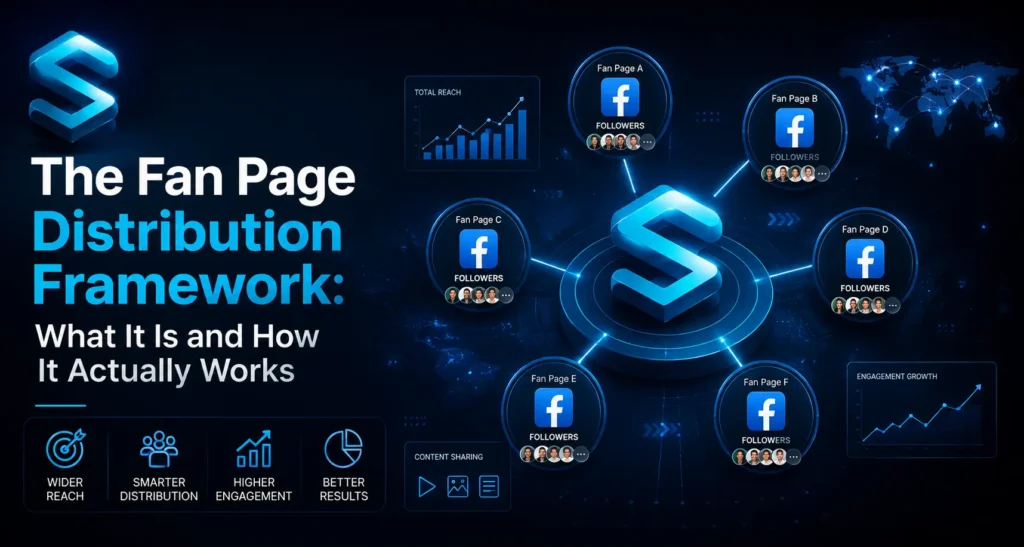
The Fan Page Distribution Framework: What It Is and How It Actually Works
Summary
Fan page distribution uses a network of niche specific pages, each with its own loyal audience, to push content to millions of real people instead of relying on one influencer or a brand’s own limited reach. It works differently from influencer marketing, which borrows one person’s trust, and personal branding, which builds long term authority for a founder. A real network vets every page for authentic engagement and audience geography before using it, and shows results broken down page by page so brands can actually verify what they paid for. In India, platform behaviour adds extra layers worth understanding, since shares and sends now drive Instagram’s algorithm, and WhatsApp forwarding and Facebook groups still move content in ways many agencies overlook entirely.
Key takeaways
A fan page distribution network is built from established niche pages, not from your own brand account, so it bypasses the reach ceiling every brand page eventually hits
Reach and engagement are not the same thing, and a real network delivers both instead of chasing one big number that nobody actually interacts with
Most fake networks give one combined number with no breakdown, so always ask for page level reporting before trusting any reach claim
Influencer marketing borrows trust from one person, fan page distribution borrows scale from many audiences at once, and personal branding builds long term authority, each one solves a different problem
Shares and sends now carry the most weight in Instagram’s ranking system, so content built for a page network needs to be genuinely worth forwarding, not just watching
WhatsApp forwarding and Facebook groups still move content meaningfully in India, and a network that ignores these layers is leaving reach on the table
Introduction
If you have spent any time researching how to get real reach in India without burning your entire budget on Meta ads, you have probably come across the term fan page marketing. Some agencies explain it well. Most don’t explain it at all, they just show you a big number and ask for your card details.
This guide is about fan page distribution networks. It tells you what a fan page distribution network is. You will learn how the mechanics of a fan page distribution network work. The guide will help you figure out if a fan page distribution network is real or fake. It will also tell you when to use a fan page distribution network of influencer marketing or personal branding, for a fan page distribution network.If you want to see the exact guaranteed numbers, the process, and a real campaign result, that lives on SocialSEO’s fan page marketing page. This piece is about understanding the category itself before you commit budget to anyone.
What is a fan page distribution network
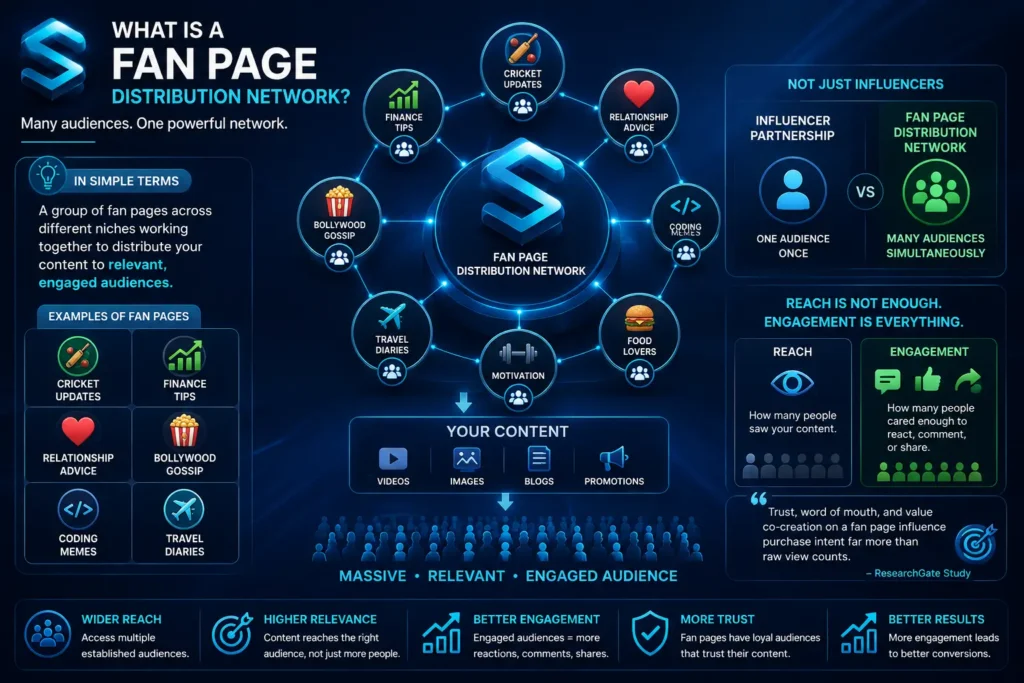
A fan page is a page built entirely around one interest. A cricket page, a finance page, a relationship advice page, a Bollywood gossip page, a coding memes page. These pages exist because someone built an audience around one topic and kept feeding that audience content it actually wanted. Over time, that audience becomes loyal in a way a random brand page never manages.
A fan page distribution network takes a group of these pages, spread across many niches, and turns them into a coordinated distribution system. Instead of relying on one influencer with one audience, or your own brand page with its own follower ceiling, you get access to dozens of established audiences at once, each one already primed for the kind of content you’re pushing.
This is different from an influencer partnership in one basic way. An influencer partnership gives you one audience, once. A distribution network gives you access to many audiences simultaneously, each matched to the content that actually fits them.
It’s also worth separating reach from engagement here, since the two get confused constantly. Reach tells you how many people saw something. Engagement tells you how many people cared enough to react, comment, or share it. A study on fan page engagement and consumer behaviour found that trust, word of mouth, and value co-creation on a fan page influence a person’s actual purchase intent far more than raw view counts do. A big number that nobody engages with isn’t distribution, it’s noise.
How to spot a fake fan page marketing network
This industry has a real trust problem, and it’s worth naming directly instead of dancing around it. A lot of what gets sold as fan page marketing is bot traffic dressed up with a big number. Here’s what to actually check before you hand anyone your budget.
Look at the growth pattern being promised. Real distribution builds gradually as content spreads through shares and reposts. A number that spikes instantly and flatlines right after is not how organic reach behaves.
Ask whether the report will break results down page by page. A single combined number with no way to see which pages actually delivered anything isn’t proof, it’s a screenshot.
Ask how pages get chosen and checked before they’re used. If the answer is vague, or nobody can explain any real criteria, there’s a good chance nothing is being checked at all.
Be cautious of any reach number that comes with no timeframe attached. A guarantee only means something when there’s a deadline you can hold someone to.
Ask directly whether the network can tell the difference between raw views and verified, human views. If they can’t answer that clearly, they’re probably not measuring it.
None of these questions are complicated, but almost nobody asks them before signing anything. Asking upfront protects your budget and tells you a lot about who you’re actually dealing with.
Fan page marketing vs influencer marketing vs personal branding
These three approaches are often lumped together, but they solve different problems, and the strongest growth strategies usually combine more than one.
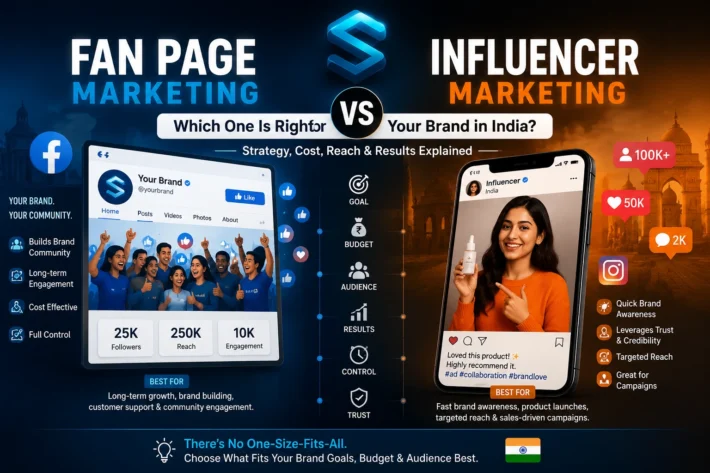
Influencer marketing borrows trust. When an influencer promotes something, their audience’s trust partially transfers to the brand. It works well for one time launches or product pushes, but it depends entirely on one person’s schedule, mood, and rates, and results vary wildly from creator to creator.
Fan page distribution is really good at getting your message to a lot of people. You do not just get one person talking about you you get a lot of groups of people who are really interested in what you have to say. This is usually cheaper than paying one person to tell people about you. The goal of fan page distribution is to get your message seen by many people as possible who are interested in what you have to say and to do this in a short amount of time. Fan page distribution is, about getting your message out there and seen by a lot of people.
Personal branding builds something neither of the above can, long term authority tied directly to a person. This is the entire premise behind SocialSEO’s founder personal branding path, which uses an AI clone system to build a founder’s presence and guarantees 10,000 followers in 90 days. Personal branding compounds over time in a way a burst of views or a single influencer post never will.
The smartest approach usually treats these as complementary, not competing. Fan page distribution builds initial visibility and momentum fast. Personal branding builds the long term trust layer underneath it. Neither one replaces the other, they’re solving for different timelines.
The India specific mechanics most agencies never mention
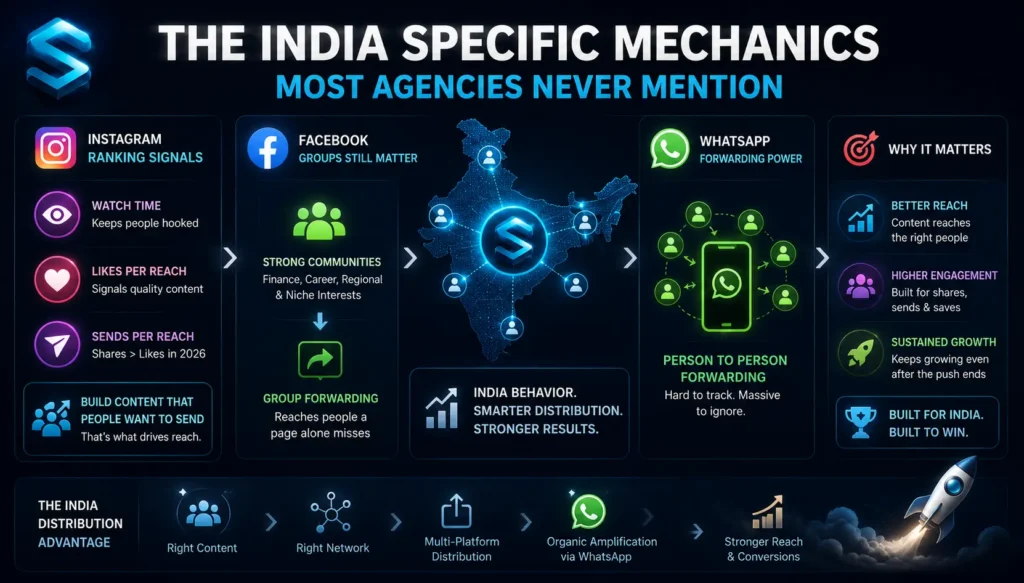
A few things about how content actually moves in India change how a distribution network should be built, and most agencies selling this service globally never adjust for it.
Instagram’s own ranking signals matter a lot here. According to reporting on Instagram’s 2026 algorithm confirmed by Adam Mosseri, the platform now weighs watch time, likes per reach, and sends per reach as its three most important ranking factors, with shares in particular carrying more weight than ever before. This means content built to travel on a fan page network needs to be engineered for people to actually send it to someone else, not just glance at it and scroll past. A network that understands this builds content differently for Reels than for a static post.
Facebook groups still carry real weight in India for specific audiences, especially in finance, career, and regional interest communities, in a way that has faded in a lot of Western markets. A distribution network that includes group level forwarding on top of page posting reaches people a page only strategy simply misses.
WhatsApp forwarding, while harder to measure precisely, remains one of the most powerful organic amplification layers in India once content starts moving person to person. It rarely shows up in a formal report, but it’s often the difference between a campaign that plateaus and one that keeps growing after the official push ends.
A framework built around these India specific behaviours performs noticeably better than one copied straight from a Western meme marketing playbook.
Frequently asked questions
Is fan page marketing a real strategy or just a way to sell fake views?
It can be either, depending entirely on who’s running it. A properly vetted network with page level reporting is a real, measurable distribution channel. A network with no vetting and no breakdown is usually selling inflated or bot generated numbers. The difference comes down to whether the agency can show its work.
How is fan page marketing different from just running Facebook or Instagram ads?
Paid ads stop delivering the moment you stop paying. Fan page distribution uses already established, organic audiences, so content can keep generating views and shares even after the initial push, since it stays live on real pages rather than disappearing when a budget runs out.
Does fan page marketing work for every kind of brand?
Not every niche has the same page coverage. Broad categories like lifestyle, entertainment, fitness, and finance tend to have a large ecosystem of established pages to work with. Extremely narrow or heavily regulated categories may have limited coverage, which is worth confirming before committing budget to any campaign.
Should a brand choose fan page marketing or influencer marketing?
It depends on the goal. Fan page marketing is built for scale and cost efficient reach across many audiences at once. Influencer marketing is built for borrowed trust from one specific voice. Many brands end up using both at different stages of a campaign.
Conclusion
Reach without a system behind it is just a gamble dressed up as a strategy. Fan page distribution works when it’s built on real vetting, real audience matching, and real reporting, not when it’s built on a big number nobody can verify. The brands that win here aren’t the ones chasing the loudest promise, they’re the ones asking the right questions before they spend a rupee. Once you understand how a genuine network operates, spotting a fake one becomes easy, and choosing the right growth strategy for your brand becomes a lot less confusing. If you’re ready to see exactly how this looks in practice, with a guaranteed number and a real campaign behind it, that’s where SocialSEO‘s fan page marketing framework picks up from here.