What Is an AI Clone for Founders? How Indian Entrepreneurs Are Building Personal Brands
Summary
An AI clone is a version of a founder trained on their real voice, face, and way of speaking, built to keep content consistent without daily filming. Indian founders are adopting this because founder-led video builds trust faster than written content, and bilingual delivery in Hindi and English performs especially well across Indian cities.
A properly trained clone avoids the robotic feel people fear, since it mirrors real phrasing rather than a generic script. India’s data protection law treats voice and likeness as personal data, so proper consent and disclosure matter before using one. Real founders, from wellness coaches to SaaS builders, have used AI clones to stay visible during busy periods without losing authenticity or audience trust.
Key takeaways
An AI clone is trained specifically on one founder’s real voice and delivery, unlike a generic AI avatar or spokesperson.
Founder led video content builds trust faster than written content, and bilingual Hindi and English delivery performs especially well in Indian cities.
A properly trained clone doesn’t feel robotic because it mirrors how the founder actually speaks, not a generic script.
India’s Digital Personal Data Protection Act treats voice and likeness as personal data, so consent and disclosure aren’t optional steps.
Founders should plan for continuity in case they step back or the brand evolves, since dependency on one person’s likeness carries real risk.
Real founders, including wellness coaches and SaaS builders, have used AI clones to stay consistently visible during high workload or travel periods without losing authenticity.
Introduction
Say the words “AI clone” to most founders and you’ll see the same reaction. A slight frown, a bit of suspicion, maybe a joke about robots taking over. It sounds like something out of a sci-fi movie, not something a real business owner would actually use.
Here’s the simple truth behind the buzzword. An AI clone is a version of you, trained on how you actually talk, look, and think, that can create content in your voice without you sitting in front of a camera every single day. It’s not a fake face reading a random script. It’s your own words, your own tone, running on autopilot so your audience hears from you consistently, even on the days you’re too busy to post.
Founders like Meta’s Mark Zuckerberg are already exploring versions of this idea internally, training an AI on their own mannerisms and public statements. If a founder running one of the biggest companies in the world sees value in this, it’s worth understanding what it actually is before writing it off.
What an AI clone actually is, in plain language
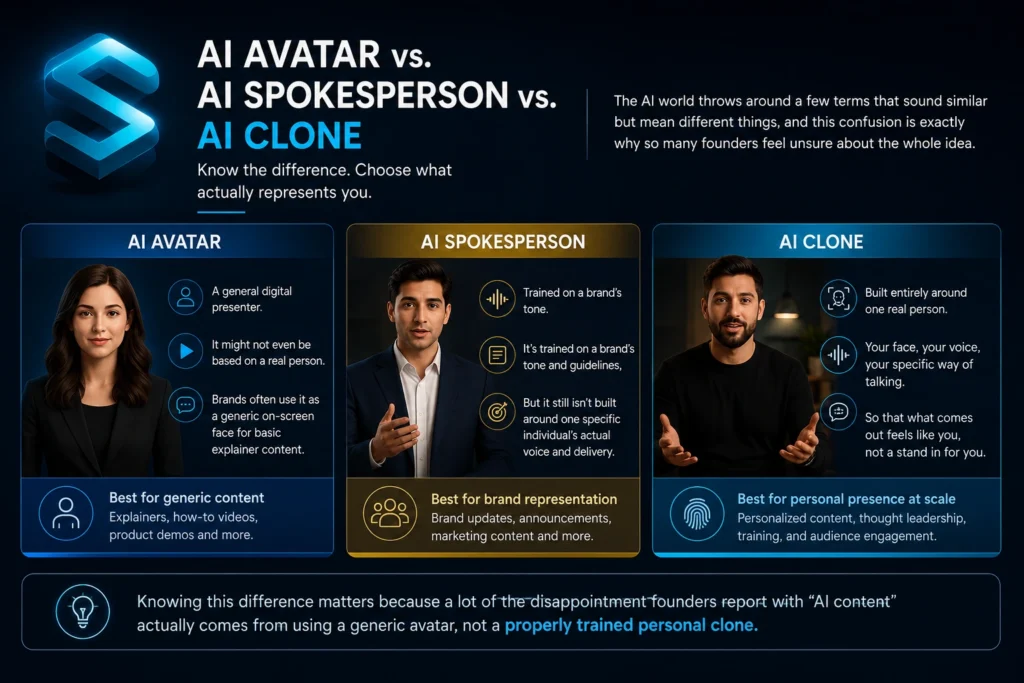
The AI world throws around a few terms that sound similar but mean different things, and this confusion is exactly why so many founders feel unsure about the whole idea.
An AI avatar is a general digital presenter. It might not even be based on a real person, and brands often use it as a generic on-screen face for basic explainer content.
An AI spokesperson is a step closer to personal. It’s trained on a brand’s tone and guidelines, but it still isn’t built around one specific individual’s actual voice and delivery.
An AI clone, sometimes called a digital twin, is different from both. It’s built entirely around one real person, your face, your voice, your specific way of talking, so that what comes out feels like you, not a stand in for you.
Knowing this difference matters because a lot of the disappointment founders report with “AI content” actually comes from using a generic avatar, not a properly trained personal clone.
Why Indian founders are adopting this right now
We covered this in an earlier piece on why Indian founders need a personal brand, founder visibility now directly shapes buyer trust in India, and video carries far more weight than written content alone. A well trained founder video reportedly carries roughly three times more trust than a ghostwritten article, since viewers can see a real person explaining something rather than reading polished but faceless text.
There’s also a distinctly Indian advantage here. Content published in both Hindi and English sees meaningfully stronger engagement across Tier 1 and Tier 2 Indian cities compared to English only content, according to recent data on AI avatar adoption among Indian founders. A single AI clone recording can be delivered in multiple languages from one session, something that would take a founder hours of separate filming to do manually.
Choosing your approach: filming yourself, hiring help, or using an AI clone
Before jumping into AI clones, it helps to be honest about the real options a founder actually has.
Filming yourself gives you complete authenticity at zero extra cost, but it demands daily time most founders simply don’t have once the business gets busy.
Hiring a ghostwriter or content team solves the writing problem, but it doesn’t solve the growing expectation that founders show up on video, not just in text.
Using an AI clone solves both the consistency problem and the on camera presence problem, but it needs upfront setup, a proper training session, and some legal groundwork most founders don’t realize they need until later.
| Approach | Time Required | Authenticity Risk | Cost | Scalability |
| Filming yourself | High, daily commitment | Very low | Free | Low, limited by your own hours |
| Ghostwriter or content team | Low to moderate | Moderate, no face or voice | Moderate | Moderate |
| AI clone | Low after initial setup | Low, if properly trained | Higher upfront, lower ongoing | High |
Will it actually feel fake? Addressing the real objection
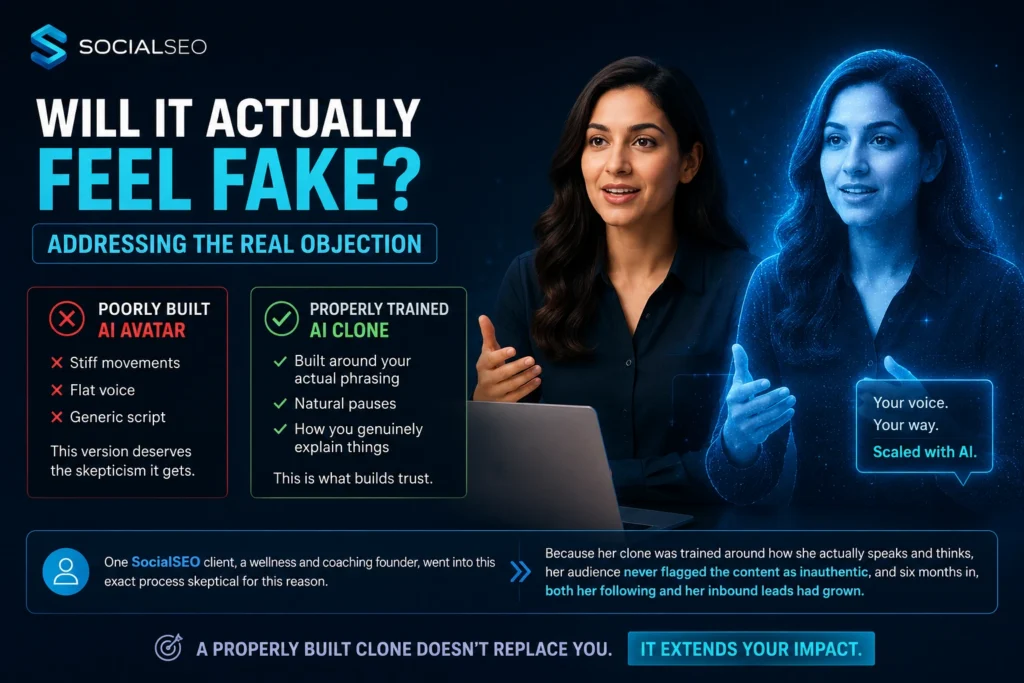
This is the question every founder actually wants answered before trying any of this, so let’s answer it directly instead of dancing around it.
A poorly built AI avatar does feel off. Stiff movements, a flat voice, a generic script anyone could have written. That version deserves the skepticism it gets.
A properly trained clone is different because it’s built around your actual phrasing, your natural pauses, and the way you genuinely explain things, not a script written by someone who’s never heard you speak.
One SocialSEO client, a wellness and coaching founder, went into this exact process skeptical for this reason. She worried an AI driven system would sound generic and quietly damage the trust she’d already built with her audience. Because her clone was trained around how she actually speaks and thinks, her audience never flagged the content as inauthentic, and six months in, both her following and her inbound leads had grown. That single result answers the fake objection better than any technical explanation can.
What Indian founders legally need to know before using one
This part gets skipped by almost every article on this topic, and it genuinely matters.
Under India’s Digital Personal Data Protection Act, your voice and your face count as personal data. That means using them to build an AI clone requires clear, documented consent, even if the clone is trained on your own likeness for your own use. Legal guidance on India’s data protection framework confirms that unlawful use of someone’s likeness or voice in AI generated content can carry serious financial penalties.
Beyond consent, several platforms now expect AI generated content to be clearly disclosed rather than passed off as unedited footage. This isn’t about hiding what you’re doing. Being upfront about using an AI clone actually builds more trust than pretending every single video was filmed live, and it keeps you on the right side of a legal framework that is only getting stricter.
The practical takeaway is simple. Work with a provider who handles consent documentation and disclosure properly from day one, rather than treating it as an afterthought.
What happens if you step back or your brand evolves
Here’s a risk nobody talks about. If your entire content engine is built around your personal likeness, what happens if you eventually step back from the business, bring in a co-founder as the new face, or pivot the company in a new direction.
This mirrors the founder dependency risk we covered in our piece on why founders need a personal brand. An AI clone doesn’t remove that risk, it actually makes planning for it more important, since your voice becomes an even bigger part of the brand’s daily presence. The fix isn’t avoiding an AI clone. It’s having a clear plan for what the content strategy looks like if your role in the business changes down the line.
How Indian entrepreneurs are actually using this today
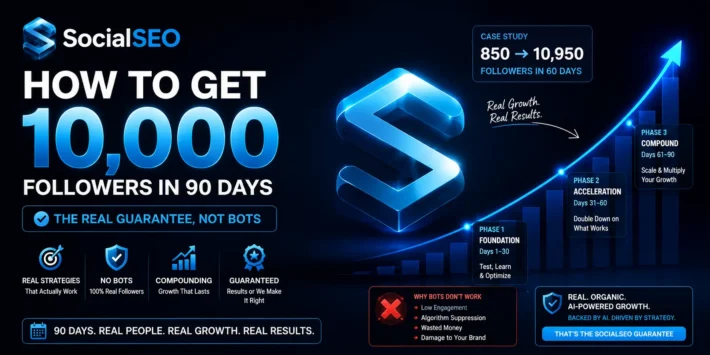
The real use cases are refreshingly practical. A SaaS founder running an AI tools startup used a fully trained content system to stay visible on LinkedIn during a period where running the company left zero time for filming. Within two weeks, his voice was live and publishing consistently, and within ninety days his following had grown past ten thousand real, engaged followers, not inflated numbers.
Other founders use this specifically to reach regional audiences, recording once and letting the clone deliver the same message in Hindi and English without needing two separate shoots. Some use it simply to stay visible during heavy travel periods or high workload stretches when they’d otherwise go quiet for weeks.
How to actually start
Start by getting clear on your voice and two or three core content pillars, since a clone trained without direction just becomes a faster way to publish unfocused content.
Next, record a proper training session rather than a rushed five minute clip, since clone quality depends heavily on the material it learns from.
Confirm your consent documentation and disclosure approach before publishing anything, so you’re compliant from the first post rather than fixing it later.
Finally, launch with a small batch of content first, see how your audience responds, then scale up once you’re confident it genuinely sounds like you.
Real world examples
Tony Robbins’ team built an AI twin trained on his coaching style and public material. According to reporting on founders and executives using digital twins, his AI twin opened up an entirely new revenue stream for his business without requiring any additional time investment from him personally. This is a strong example to cite when you want to show that AI clones aren’t just a content shortcut, they can become a genuine business asset on their own.
A founder named Aman Rai has a fully working AI clone built with accurate lip sync and brand matched delivery, publishing across multiple languages under his own social handle. What makes this example useful is that it’s verifiable. Anyone can go watch the actual output and judge for themselves whether it holds up, which is a rare level of transparency in this space and worth mentioning when addressing the authenticity objection.
Even Meta’s Mark Zuckerberg is having an AI version of himself built internally, trained on his mannerisms, tone, and views on company strategy, according to Entrepreneur’s coverage of the project. This is a useful example specifically because it shows even the most resourced founder in the world sees personal presence as something worth scaling deliberately, not something to abandon.
SocialSEO client examples
A SaaS founder running an AI tools startup came in fully booked with zero time to build a personal brand. His clone was trained and publishing in his own voice within two weeks of onboarding. By day sixty he had crossed six thousand genuinely engaged followers, and by day ninety he passed ten thousand, all without him ever picking up a camera regularly.
A wellness and coaching founder went in skeptical, worried an AI system would sound generic and damage the personal trust she had already built with her audience. Because her clone was trained specifically on how she actually speaks, her audience never flagged the content as inauthentic. Six months in, both her following and her inbound client inquiries had grown, directly disproving her original fear.
A consulting founder used an AI clone specifically to solve a travel problem. He traveled internationally for client work several weeks a month and kept going quiet on LinkedIn every time he was on the road. Once his clone was live, his posting stayed consistent regardless of his travel schedule, and his engagement stopped dropping during his busiest client months.
Frequently asked questions
Is an AI clone the same as a deepfake?
Not when it’s built and disclosed properly. A deepfake typically implies deception or lack of consent, while a founder’s AI clone is built with their own consent, on their own likeness, for their own brand, and is meant to be used transparently.
Is using an AI clone for personal branding legal in India?
Yes, as long as proper consent is documented and any required disclosure rules are followed. The technology itself isn’t restricted, but how you obtain consent and disclose its use matters under India’s data protection law.
Will my audience be able to tell the content isn’t really me?
If the clone is trained properly on your actual voice and phrasing, most audiences won’t flag it as different, especially since the words and ideas are still genuinely yours.
How much does an AI clone for a founder typically cost?
Pricing varies by provider and how much ongoing content production is included, so it’s worth comparing setup cost against the time and cost of producing that same volume of content yourself.
Do I still need to post original content myself? Yes, ideally.
The strongest approach blends your AI clone for consistency with occasional original, unscripted moments that keep your presence feeling fully human.
Conclusion
An AI clone isn’t about replacing a founder. It’s about making sure a founder’s voice doesn’t disappear the moment their calendar gets too full to film. Used properly, with real consent and a clone actually trained on how you speak, it becomes one more way to stay visible without burning out trying to do it all yourself.
If you’re curious what this could look like for your own brand, SocialSEO‘s founder personal branding service builds exactly this kind of system, trained on your real voice, with consent and disclosure handled properly from the start. You can also book a free strategy call to see whether an AI clone fits your stage of growth right now.